Dr. Cordelia Freeman on abortion liberation in Latin America
ARC-GS Lecture Recap
29 September 2025
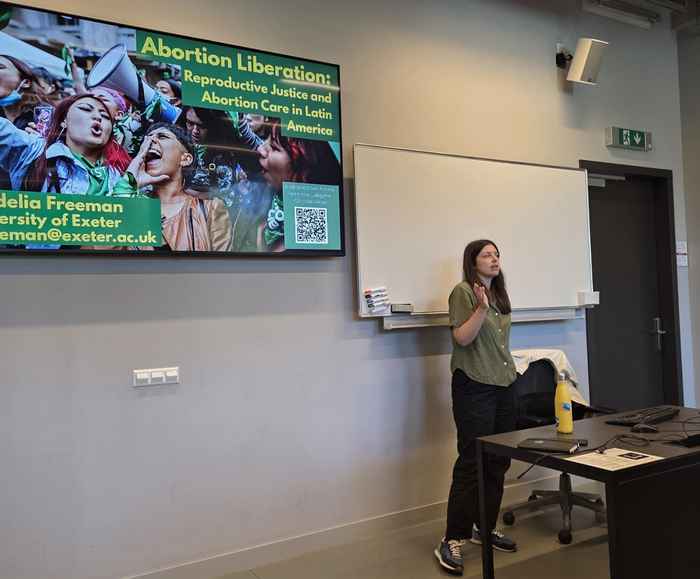
Progressive changes in abortion laws across Latin America have garnered much media attention. However, Cordelia Freeman’s research focuses on the actual practice of abortion in Argentina, Peru and Mexico. She highlights the role of misoprostol pills in making abortions accessible, as they occupy a unique legal space: as a stomach-ulcer drug, they are legally available, but they are also effective for abortion.
No magic bullet
Dr. Freeman stressed that misoprostol in itself is not a magic bullet. Rather, a crucial role is played by acompañantes, volunteers who provide information and support to those seeking an abortion. In doing so, they reimagine abortion care by supporting self-managed abortions outside of medical contexts, emphasizing autonomy, holistic and collective care.
Prefigurative politics
Dr Freeman described acompañamiento, the practice of the acompañantes, as prefigurative politics, showing what a feminist, empathetic, care-filled experience of abortion looks like. It is an act of abortion liberation: separating abortion from the state, and giving autonomy to pregnant people to manage their reproductive lives in the ways that work best for them.
Lively Q&A
The talk was followed by a lively Q&A, in which audience members asked about the visibility of acompañantes and the harassment they receive, the backlash from regular abortion providers, the financial aspects of acompañamiento, and the role of race.
Dr. Freeman’s book “Magic Misoprostol” can be downloaded for free via this link.